
Easter in Kalamata 2026: What to Expect During Holy Week

Key takeaways:
Greek Orthodox Easter in Kalamata 2026 falls on Sunday, April 12 — Holy Week begins Palm Sunday, April 5
The Good Friday Epitaphios procession is the emotional centrepiece of the entire week
Kalamata's central churches and harbour fill with candlelight at midnight on Holy Saturday
Book accommodation early — the city fills up significantly over the Easter long weekend
Easter Sunday means lamb on the spit, red eggs, and meals that stretch all afternoon

If you are anywhere near the Peloponnese in mid-April, there is one experience that will stay with you long after you leave: Easter in Kalamata. Greek Orthodox Easter is not simply a holiday here — it is the most important celebration of the year, woven into the fabric of daily life in ways that are deeply moving to witness even if you are not religious yourself.
This guide walks you through everything happening in Kalamata during Holy Week 2026, day by day, so you know exactly what to expect and where to be.
When is Easter in Kalamata in 2026?
Greek Orthodox Easter 2026 falls on Sunday, April 12. Unlike the Western Easter calendar, the Orthodox date is calculated separately and often falls later in the spring. Holy Week — Megali Evdomada — begins on Palm Sunday, April 5, and builds steadily toward the midnight Resurrection service on Holy Saturday, April 11.
If you are planning a visit, the most significant days are Good Friday (April 10), Holy Saturday evening (April 11), and Easter Sunday (April 12). Arriving by Wednesday, April 8 will allow you to settle in before the pace picks up.
What Happens Each Day During Holy Week in Kalamata?
Palm Sunday, April 5 — The week begins
Churches across Kalamata hold morning services and distribute palm branches and bay laurel crosses to the congregation. The mood is calm and reflective. If you arrive on Palm Sunday, it is a perfect low-key introduction to the week — the markets and cafés are open, and you get your first sense of the city shifting into a different rhythm.
Holy Monday to Wednesday, April 6-8 — A quieter pace
The early days of Holy Week are characterised by evening church services called Katanyktikes Akolouthies — services of deep prayer that fill the old churches of the city centre. Businesses operate normally during the day. These evenings are worth attending even briefly; the Byzantine chanting inside Kalamata's historic churches is genuinely beautiful.
Holy Thursday, April 9 — The Last Supper
The morning service at the Cathedral of Ypapanti includes a ritual reading of the Twelve Gospels. By evening, the decorated funeral biers of Christ — the Epitaphios — are being prepared in churches throughout the city, adorned with fresh flowers by parishioners who have been contributing blooms all week. This is a quiet, intimate tradition and something visitors rarely witness.
Good Friday, April 10 — The Epitaphios Procession

This is the emotional heart of Easter in Kalamata. As darkness falls on Good Friday, every church in the city carries its decorated Epitaphios through the surrounding streets in a slow, candlelit procession. The cathedral's procession moves through the city centre and is typically the largest and most atmospheric — thousands of residents line the streets holding candles, the church bells toll, and the mood is one of genuine collective mourning.
It is respectful and deeply human. Even visitors who stumble across a neighbourhood procession by accident tend to stop and stand quietly until it has passed. Dress modestly and keep camera use low-key, especially near the church entrance.
Shops and restaurants are largely closed during the evening procession hours. Plan your dinner before 8pm or after 10pm.
Holy Saturday, April 11 — The Midnight Resurrection
Holy Saturday builds quietly through the day before exploding into celebration at midnight. The Anastasi — Resurrection — service is the most famous moment of the Greek Orthodox calendar.
Just before midnight, gather at one of Kalamata's central churches or in the main square near the Cathedral. Churches are packed, so arriving by 11pm gives you a better vantage point. At midnight, the priest emerges with the Holy Light — a single candle — and the flame is passed person to person through the crowd until thousands of small candles are lit across the square. The priest calls out "Christos Anesti" (Christ is Risen), and the congregation responds "Alithos Anesti" (Truly He is Risen).
Then the fireworks begin.
It is an extraordinary moment. The combination of candlelight, the chant echoing through the square, and the explosion of fireworks overhead is something no travel itinerary can fully prepare you for. People walk home through the streets carrying their lit candles, trying to keep the flame alive — a tradition said to bring blessing to the household.
After the service, families return home for Magiritsa — a rich lamb soup made with offal, rice and lemon — the first meal after the Lenten fast. Many restaurants in Kalamata also serve Magiritsa through the early morning hours.
Easter Sunday, April 12 — Lamb, Red Eggs and Long Tables
Easter Sunday morning in Kalamata smells like woodsmoke. From early morning, families throughout the city are slow-roasting whole lambs on the spit in their gardens, courtyards, and across the grounds of the Kalamata Cultural Centre.

The meal is typically a long, joyful family affair that begins around 2pm and can stretch well into the evening. The table includes kokoretsi (spit-roasted offal, much tastier than it sounds), tsoureki (sweet braided Easter bread), and kokkina avga — hard-boiled eggs dyed deep red, which are cracked against each other in a game called tsougrisma. The person whose egg survives uncracked is said to have luck for the year ahead.
If you are visiting as a guest — staying in a rental property or knowing local residents — you may well find yourself invited to share the table. This is a genuinely generous culture, and Easter is the time when that generosity is most on display.
Where to Experience Easter in Kalamata
Cathedral of the Ypapanti of Christ — The main cathedral in the city centre is the focal point for the Holy Saturday midnight service and the largest Good Friday procession. Arrive early.
The Old Town (Kastro area) — The neighbourhood around the old Venetian castle has a more intimate neighbourhood feel. Smaller processions wind through quiet streets flanked by orange trees.
Kalamata Central Square and harbour — After the midnight service, people drift toward the harbour and the central square. Restaurants and cafés that are open will be full by 1am.
The surrounding villages — If you have a car, villages like Kardamyli, Stoupa, and the villages of the Taygetos foothills celebrate Easter with their own character. The smaller the village, the more the procession feels like a genuine community event rather than a spectacle.
Practical Tips for Easter in Kalamata
Book accommodation early. Easter weekend draws visitors from across Greece and increasingly from abroad. Properties in central Kalamata fill up weeks in advance.
Expect closures on Good Friday and Easter Sunday. Supermarkets and many restaurants close during key service hours. Stock your kitchen for Friday evening and plan Sunday around the meal.
Dress appropriately for church visits. Covered shoulders and knees are expected inside churches during Holy Week services.
Driving on Easter Sunday — roads around popular areas are quiet in the morning but busy in the afternoon as families travel between villages. Budget extra time.
The weather in mid-April — Kalamata in April averages highs around 19–21°C with occasional showers. Evenings are cool, especially for outdoor candlelight services. Bring a light jacket.
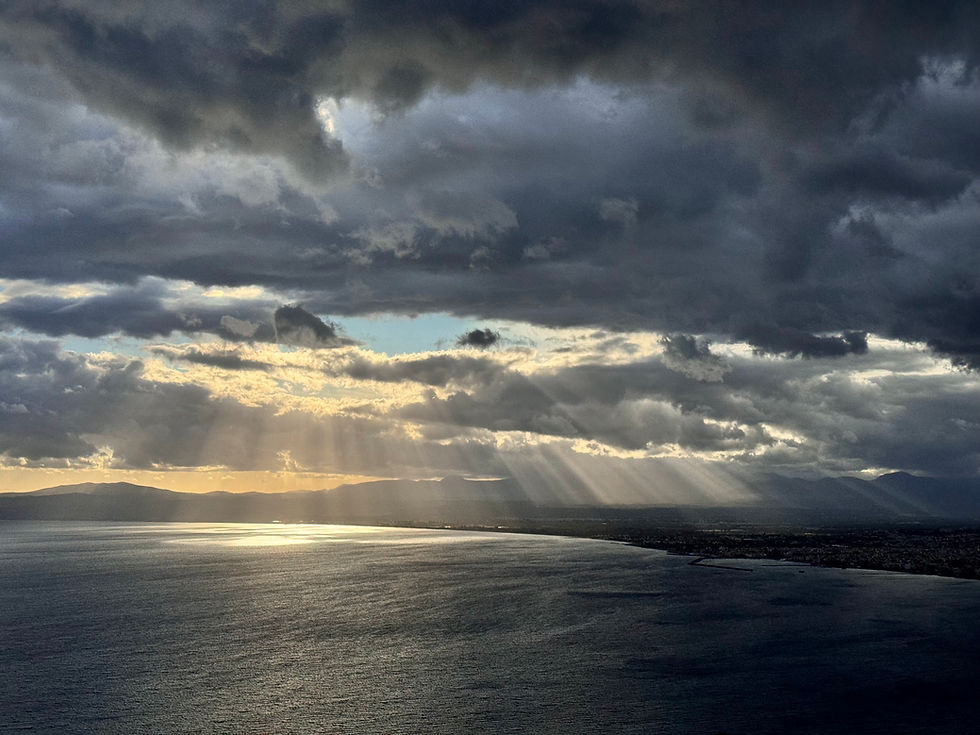
Staying in Kalamata for Easter
Experiencing Easter from within the city — rather than from a day-trip base — makes an enormous difference. Waking up on Easter Sunday to the smell of lamb on the spit outside, or walking to the cathedral through the neighbourhood with neighbours carrying candles, is a very different experience from arriving by bus for the evening.
Lithos & Key manages a small number of carefully selected properties in central Kalamata and the surrounding area. If you are looking for accommodation that puts you in the heart of the Easter experience, get in touch with our team — we are happy to help you find the right base for your stay.
Frequently Asked Questions
When is Greek Orthodox Easter 2026? Greek Orthodox Easter Sunday 2026 falls on April 12. Holy Week begins on Palm Sunday, April 5.
Is Easter celebrated differently in Kalamata than the rest of Greece? The structure of Holy Week observances is the same across Orthodox Greece, but each region and city has its own character. Kalamata is a mid-sized city with a strong community feel — the Good Friday procession and midnight Anastasi service have a warmth and scale that sits between a major city spectacle and a small village gathering.
Can tourists attend Easter church services in Kalamata? Yes, absolutely. Greek Orthodox services are open to visitors. The key is to be respectful — dress modestly, keep photography discreet, and be aware that these are active religious services, not performances.
What restaurants are open during Easter in Kalamata? Most traditional tavernas and kafenia will be open for lunch on Easter Sunday and most evenings during Holy Week, though closures during the Good Friday procession (approximately 9–11pm) are common. Book ahead for Easter Sunday if you are not cooking.
Is Kalamata a good base for exploring the Peloponnese over Easter? Yes — Kalamata sits within easy reach of Ancient Messene (30 min), Mystras (1.5 hrs), Pylos and Methoni (45 min–1 hr), and Kardamyli and the Mani (45 min). It makes an excellent base for combining Easter celebrations with broader Peloponnese exploration.
Other Great Resources:
Visit Greece: https://www.visitgreece.gr
Kalamata City Guide: https://www.kalamata.gr/

Comments